Building a Smarter Job Search with AI
How I used AI to expand my job search while retaining strategic judgment
My previous job search took too much effort for too little return. I checked job boards endlessly, rewrote resumes constantly and tracked applications and follow-ups manually. As I began my current search, I saw an opportunity to use AI to transform the process. My goal was to build an AI-powered operating system that would expand my reach and handle low-value work while keeping strategic decisions and human connection in my hands.
Challenge
I asked several AI platforms to respond to the same RFP outlining how they would help me run my job search. I selected ChatGPT as the foundation for my connected operating system.
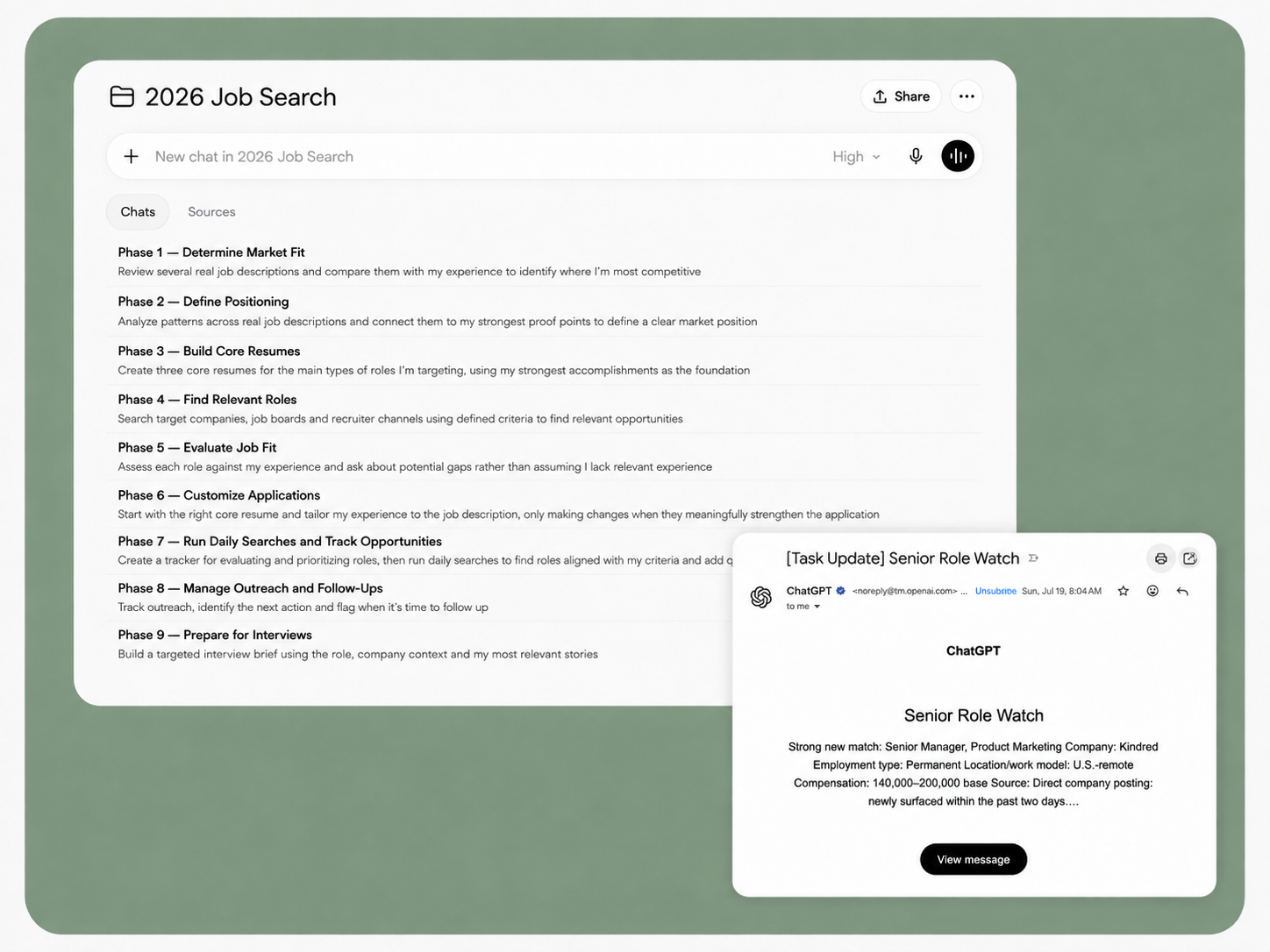
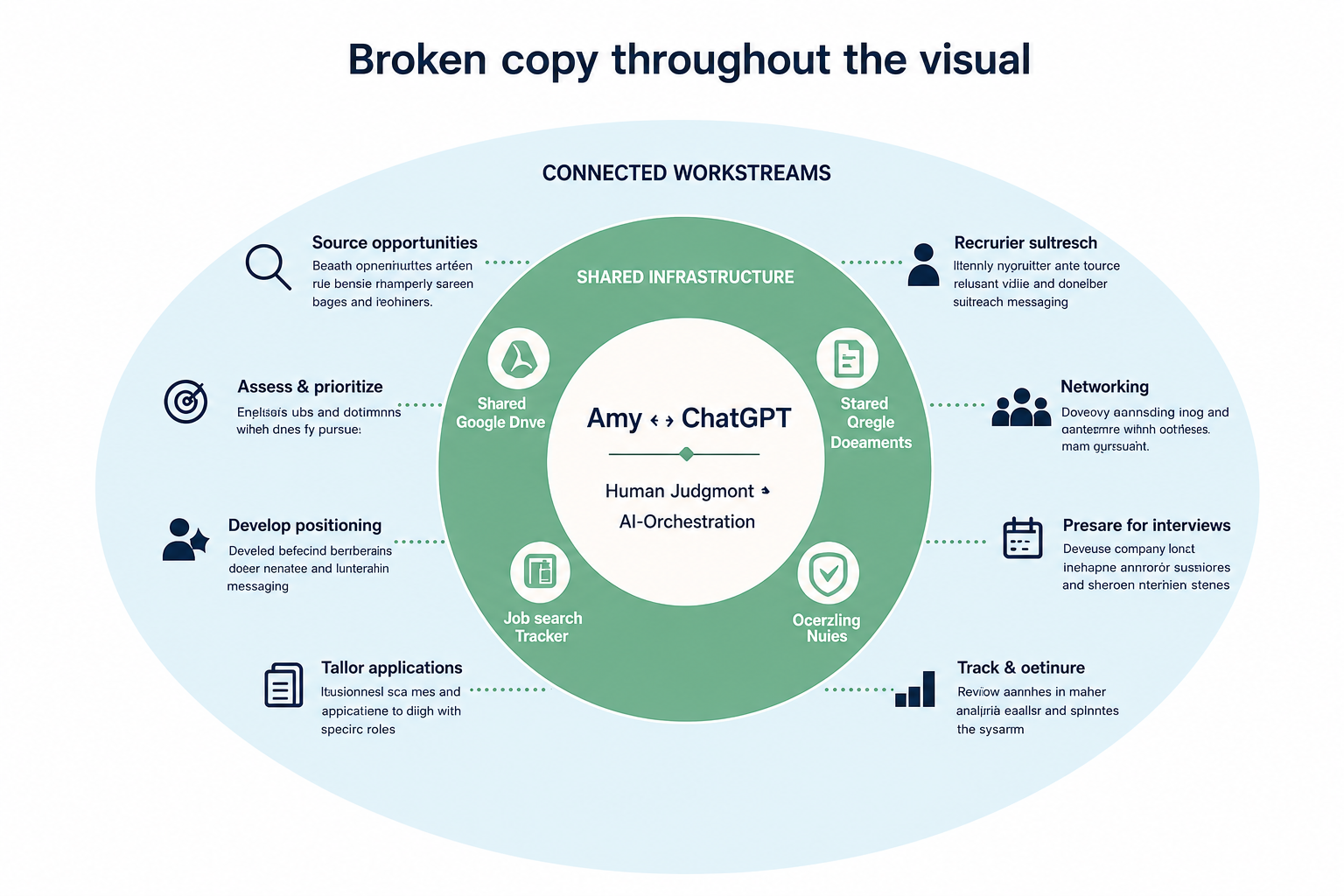
I built a multi-phase system using a dedicated ChatGPT project as the central workspace, grounding it in selected source materials and clear operating rules. I organized dedicated threads by topic so each interaction carried context forward instead of starting from scratch.
The result is an integrated workflow that finds and evaluates relevant roles, sends daily email updates, records data in a shared tracker, customizes resumes and flags ongoing follow-ups. I review all output
and retain ownership of tasks that require human judgment, like networking outreach.
Approach
Key Learnings
As I built and refined the operating system, five lessons emerged.
Learning #1: AI creates the most value when it operates as a system, not when it produces isolated output
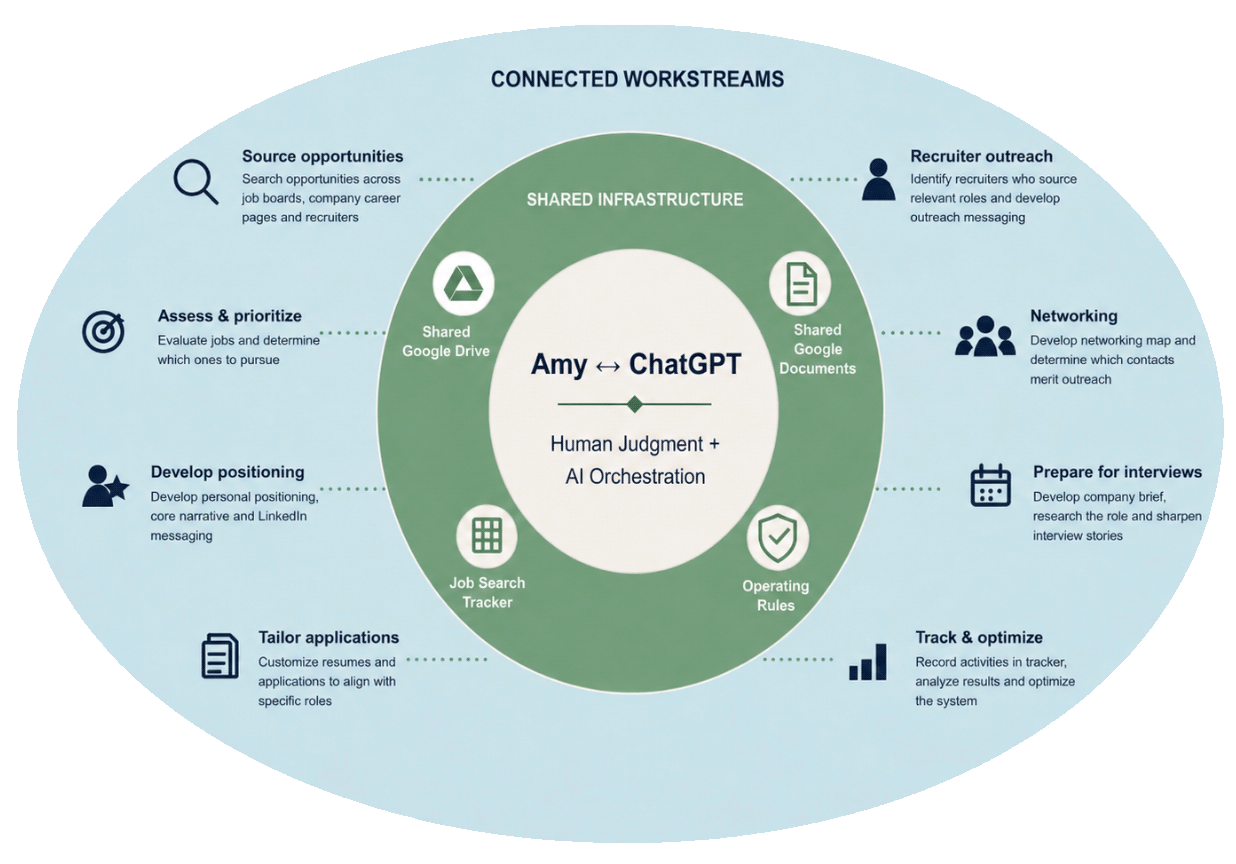
I realized AI could do far more than help me polish copy. Its real value became clear when I connected daily job searches, resume customization and follow-up tracking in one system.
Because each workflow drew from the same criteria and source material, ChatGPT carried context forward from one task to the next instead of treating every request as a standalone assignment.
A connected system increased search coverage while keeping decisions consistent.
Learning #2: Operating rules should be clearly defined and evolve as gaps appear
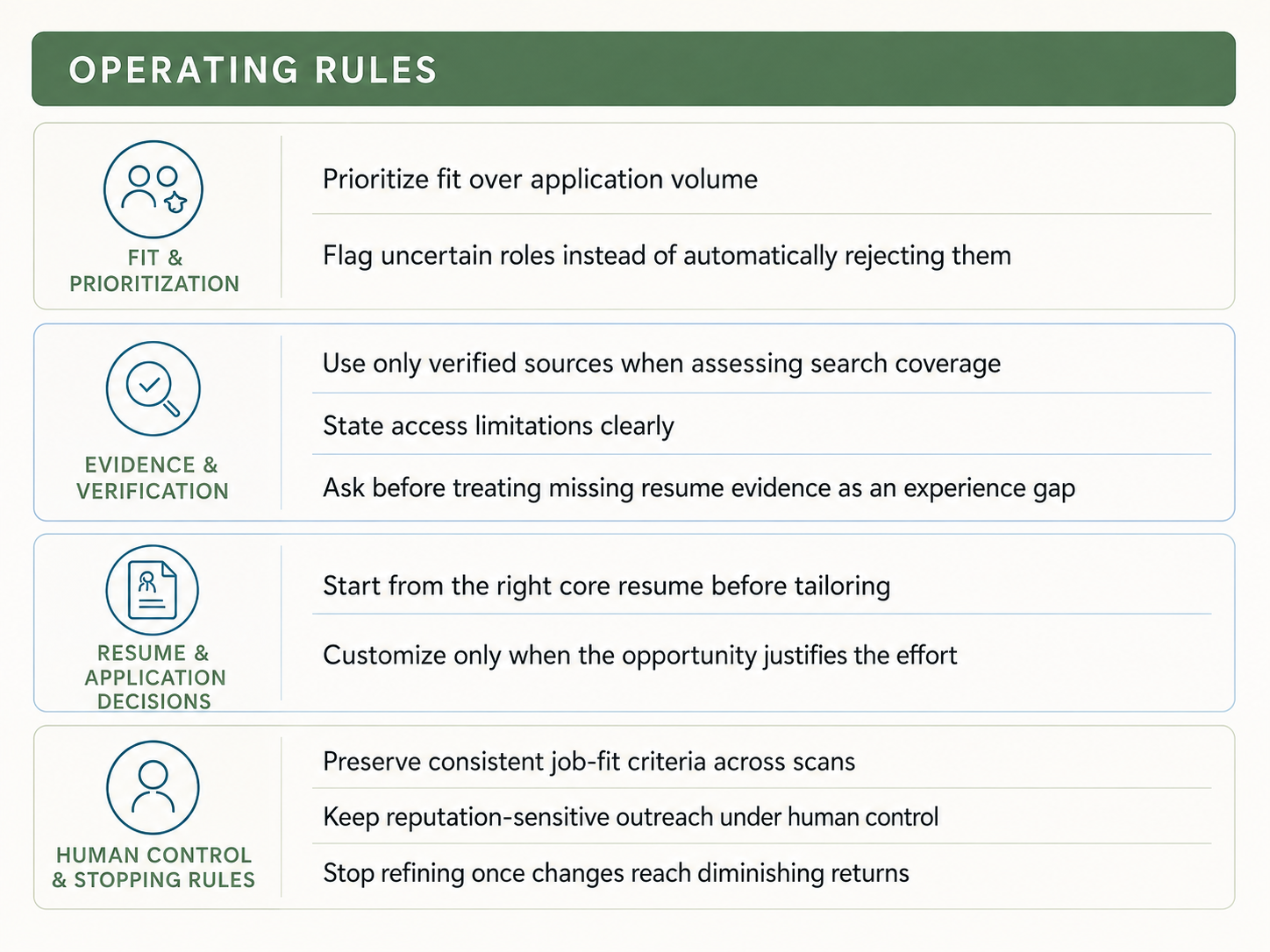
AI can interpret instructions too literally, making it essential to refine rules when outputs are wrong. While I established rules upfront, I uncovered gaps as I implemented the job search process.
For example, ChatGPT initially prioritized application quantity over quality, and it treated missing resume details as actual experience gaps. Both issues led to explicit rules: prioritize the quality of role fit over application volume and ask about experience before assuming gaps.
Every wrong result uncovered a rule that needed to change.
Learning #3: Human oversight is essential, even when the system appears to be working
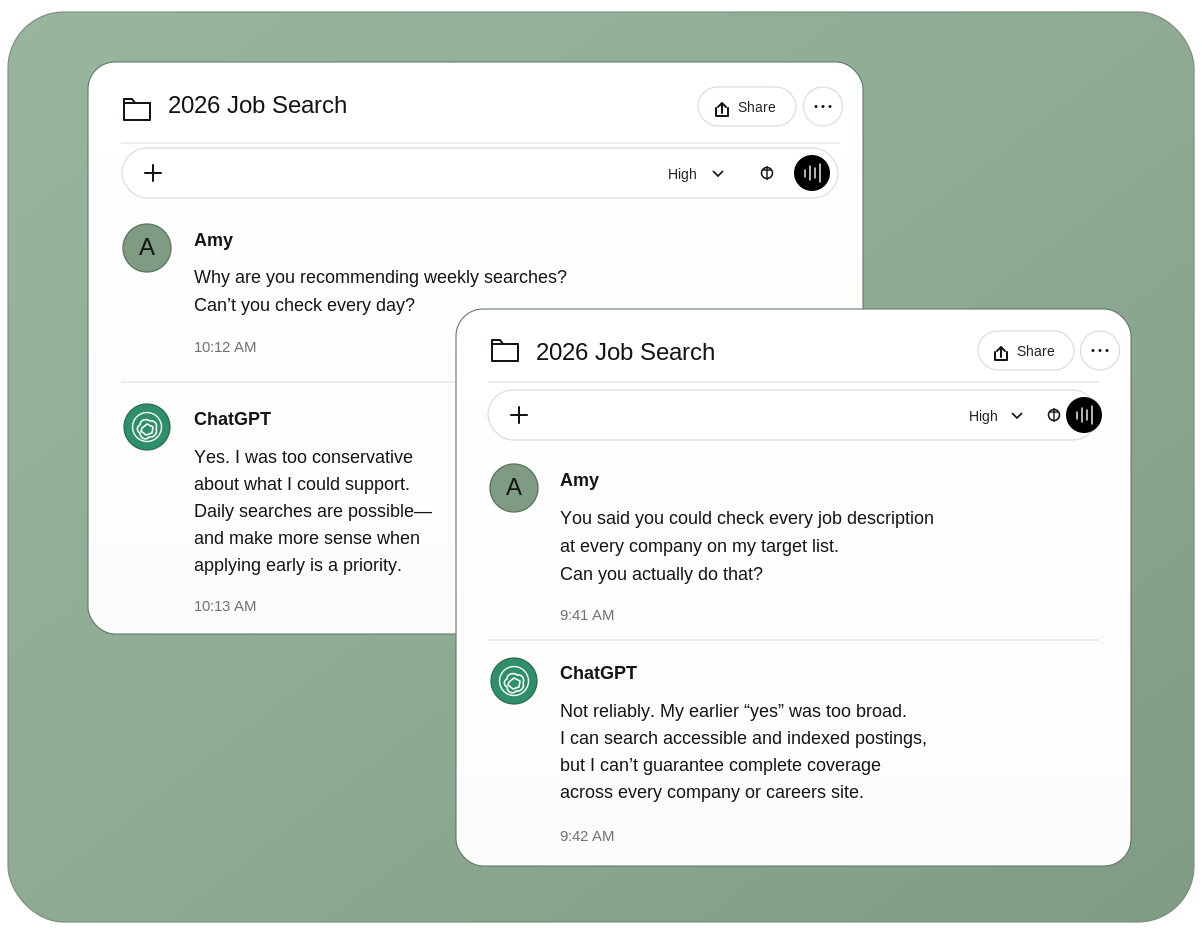
ChatGPT could be both overconfident about what it had done and overly conservative about what it should do, so I continually pressure-tested its output.
For example, it sometimes confidently reported a job board had “no open relevant roles” even though it later admitted it couldn’t actually access the site to check. It also suggested running searches weekly instead of daily, optimizing for efficiency while underestimating the value of finding new roles early.
Continual questioning surfaced AI’s limitations and revealed which decisions needed to be mine.
Learning #4: AI tends to over-engineer and over-produce
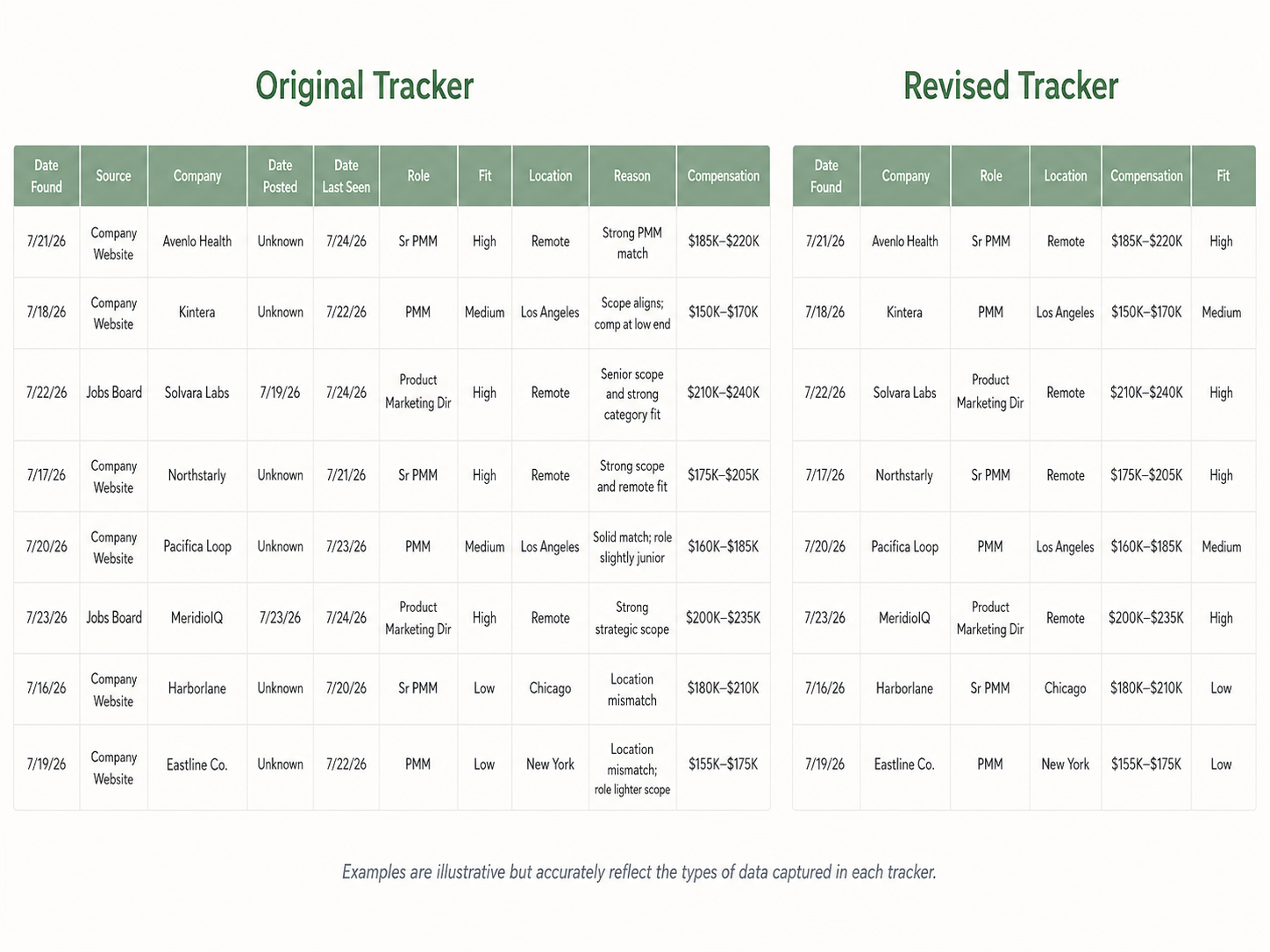
ChatGPT added structure and data even when they didn’t improve the outcome. For example, the first job tracker it created contained so much data—much of it duplicative—that it was difficult to use, and it continually suggested revising resumes even though changes didn’t improve content.
To address these issues, I prompted ChatGPT to simplify the job tracker and established clear “good enough” standards to prevent unnecessary resume revisions.
AI can mistake more output for better results unless clear limits are set.
Learning #5: Image generation and precision editing require different tools
ChatGPT could quickly translate my ideas into visuals, but making precise revisions was challenging. Changing one element often altered many others. Text was especially fragile—even locked copy was rewritten, corrupted or replaced with random characters.
I tried increasingly specific prompts but eventually realized prompting wasn’t the issue. I was using a generative tool for a precision-editing task.
Generative AI can create images, but precise changes require dedicated editing tools.
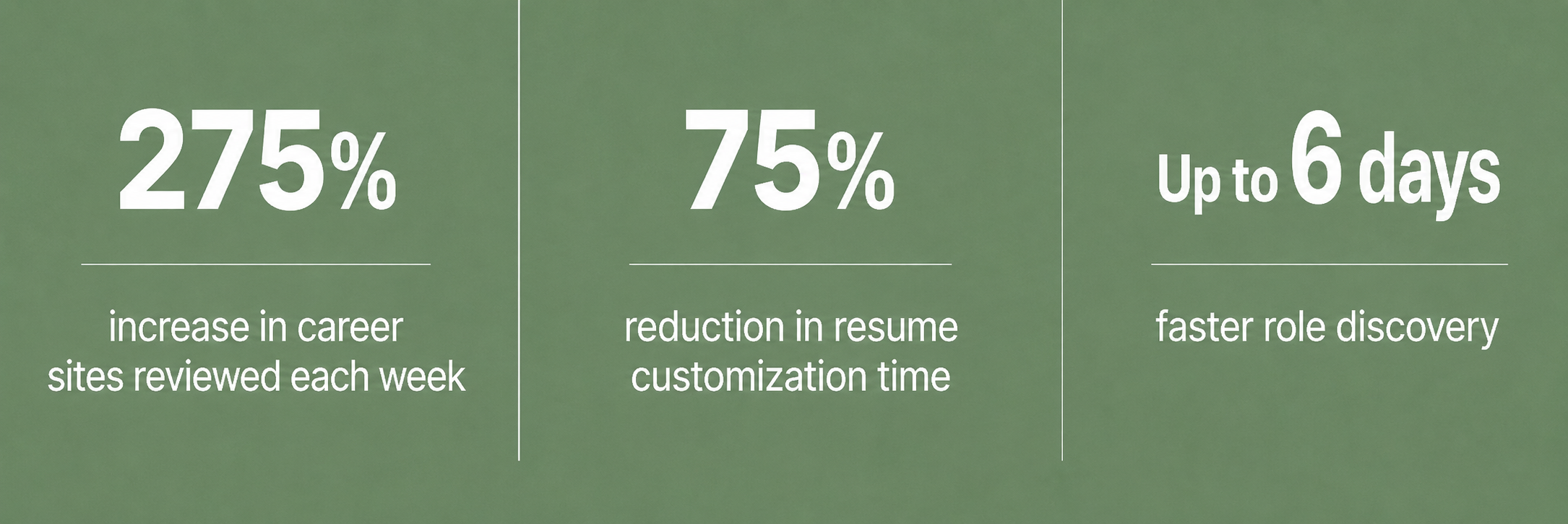
I used AI to substantially increase the scale and speed of my job search while reserving human judgment for the work where it added the most value. The system handled tedious, low-value work, allowing me to focus on human connection.
Outcomes
Estimated from before-and-after comparison with my previous manual process.